AXIS MUNDI
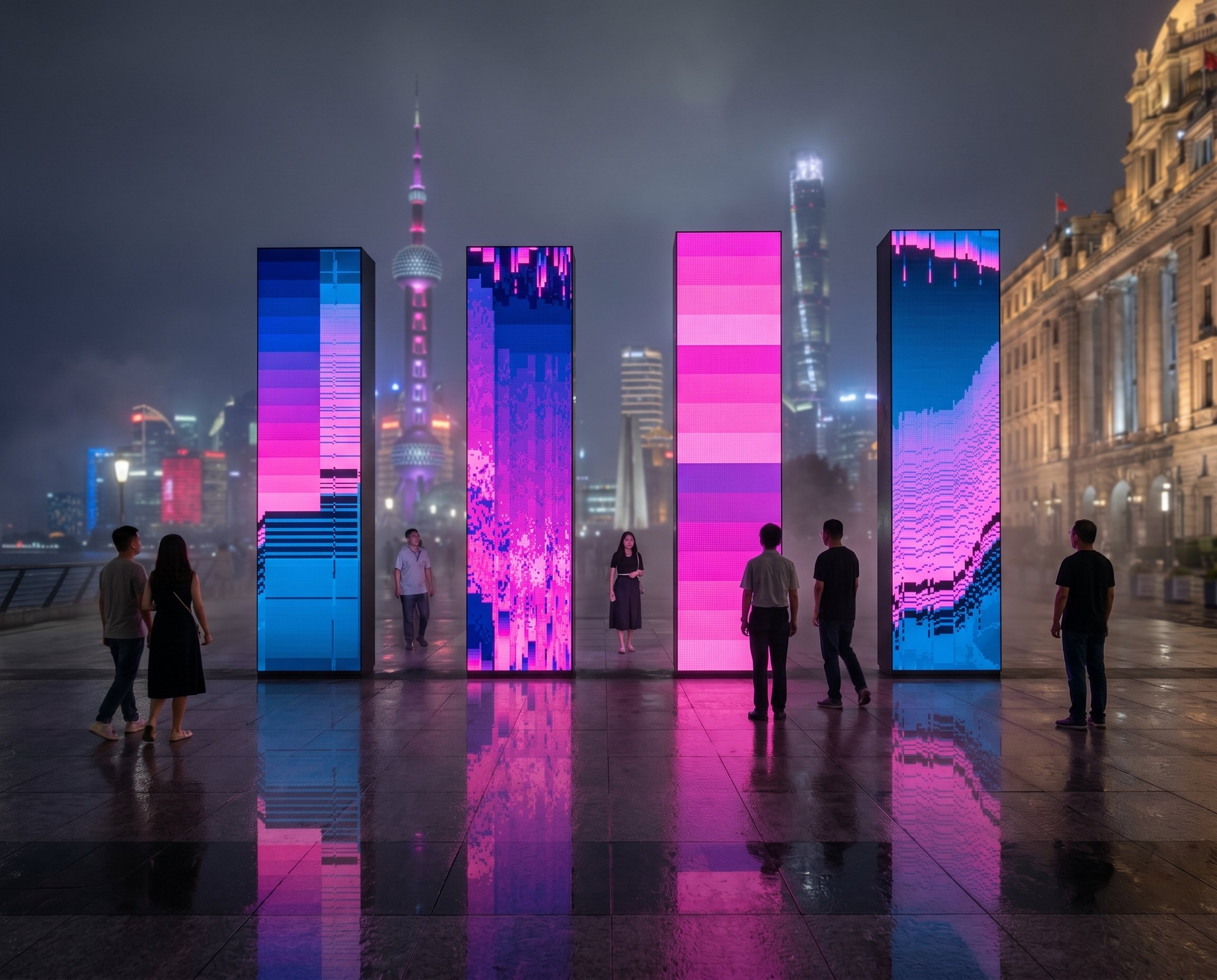
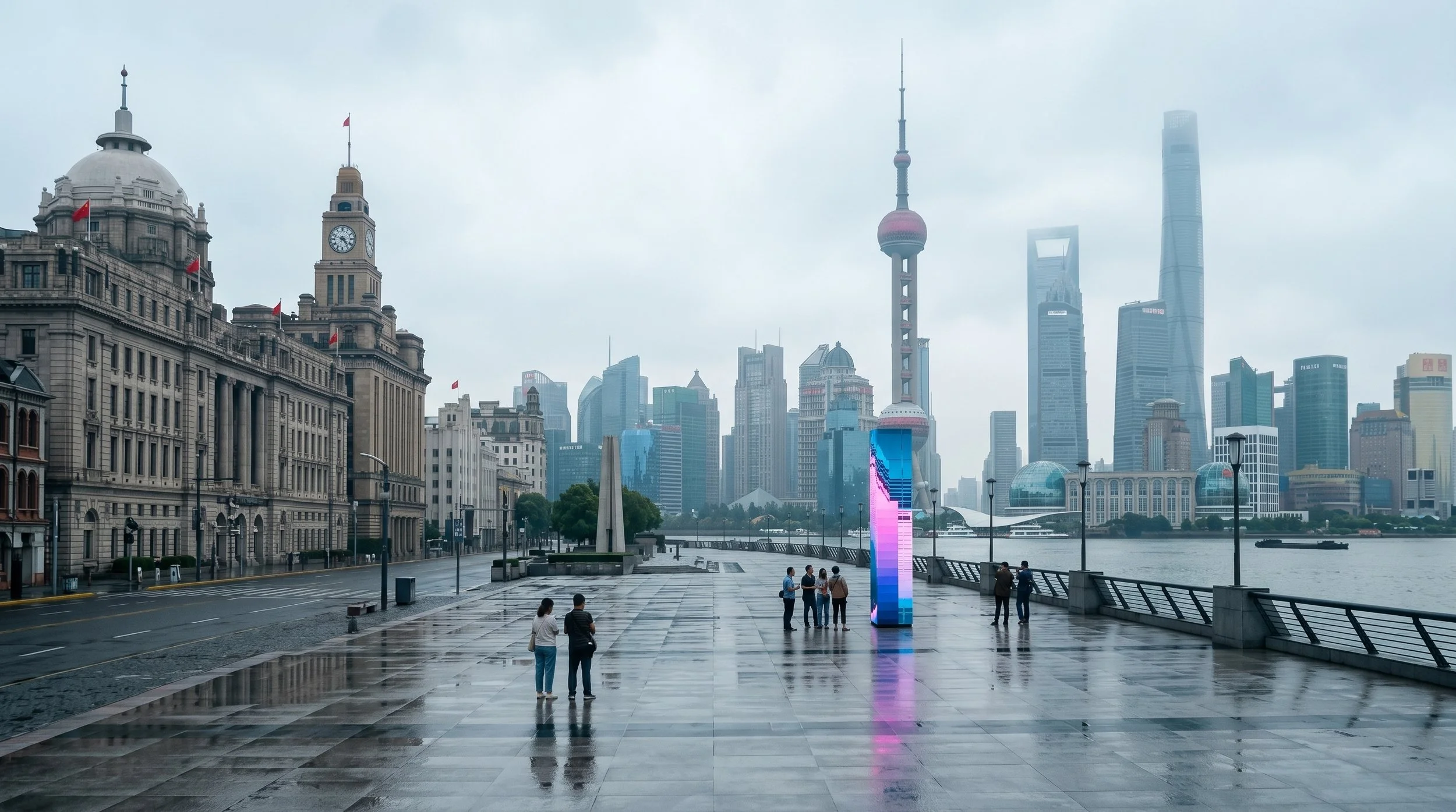
Axis Mundi is a site-specific public light installation. Inspired by the ancient concept of the axis mundi—the symbolic world axis connecting heaven and earth—the work reinterprets this universal archetype through contemporary digital media while responding directly to the identity of its host location.
The installation takes the form of a luminous geometric column whose animated visual language is based on a continuous upward and downward flow of light along its vertical axis. These opposing movements symbolize the perpetual exchange between earth and sky, matter and spirit, nature and humanity. The ascending flow represents aspiration, transformation, and spiritual elevation, while the descending movement evokes grounding, renewal, and the return of energy to the earthly realm. Together, they create a dynamic visual dialogue that expresses connection, balance, and continuity.
The visual content is generated through an AI-assisted Site Color Genome—a chromatic system derived from the environmental, architectural, climatic, and cultural characteristics of the host city. By analysing local colours, atmospheric conditions, natural landscapes, built environments, and the changing qualities of light throughout the day, the installation creates an evolving composition that reflects the unique visual identity of its location.
The work is accompanied by a generative soundscape developed from field recordings and characteristic environmental sounds collected at the site. Natural and urban sound samples—including water, wind, wildlife, weather, and the acoustic rhythms of everyday city life—are transformed into an evolving composition synchronized with the visual experience. Together, light and sound create a multisensory portrait that expresses the atmosphere and identity of each location.
Rather than functioning as a digital screen, the LED column becomes a luminous sculptural presence that transforms public space into a place of contemplation and shared experience. By combining ancient symbolism, artificial intelligence, site-specific environmental analysis, and generative audiovisual composition, Axis Mundi creates a poetic dialogue between technology, nature, and place. Each installation is uniquely shaped by its surroundings, allowing the artwork to reveal the invisible rhythms, colours, and sounds that define the identity of the city in which it is presented.
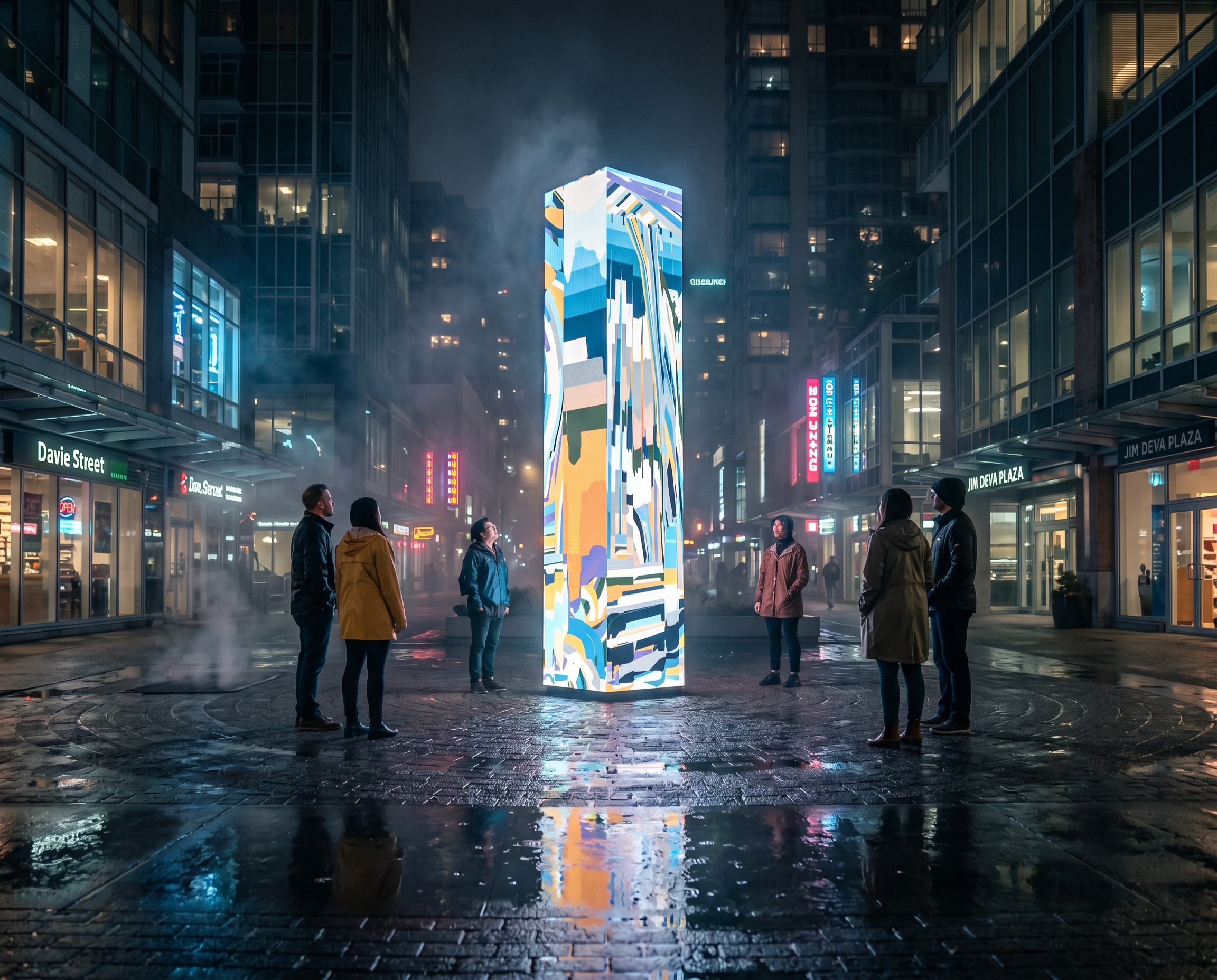

Space is organized around this center, through which a given place is transformed from profane into sacred.
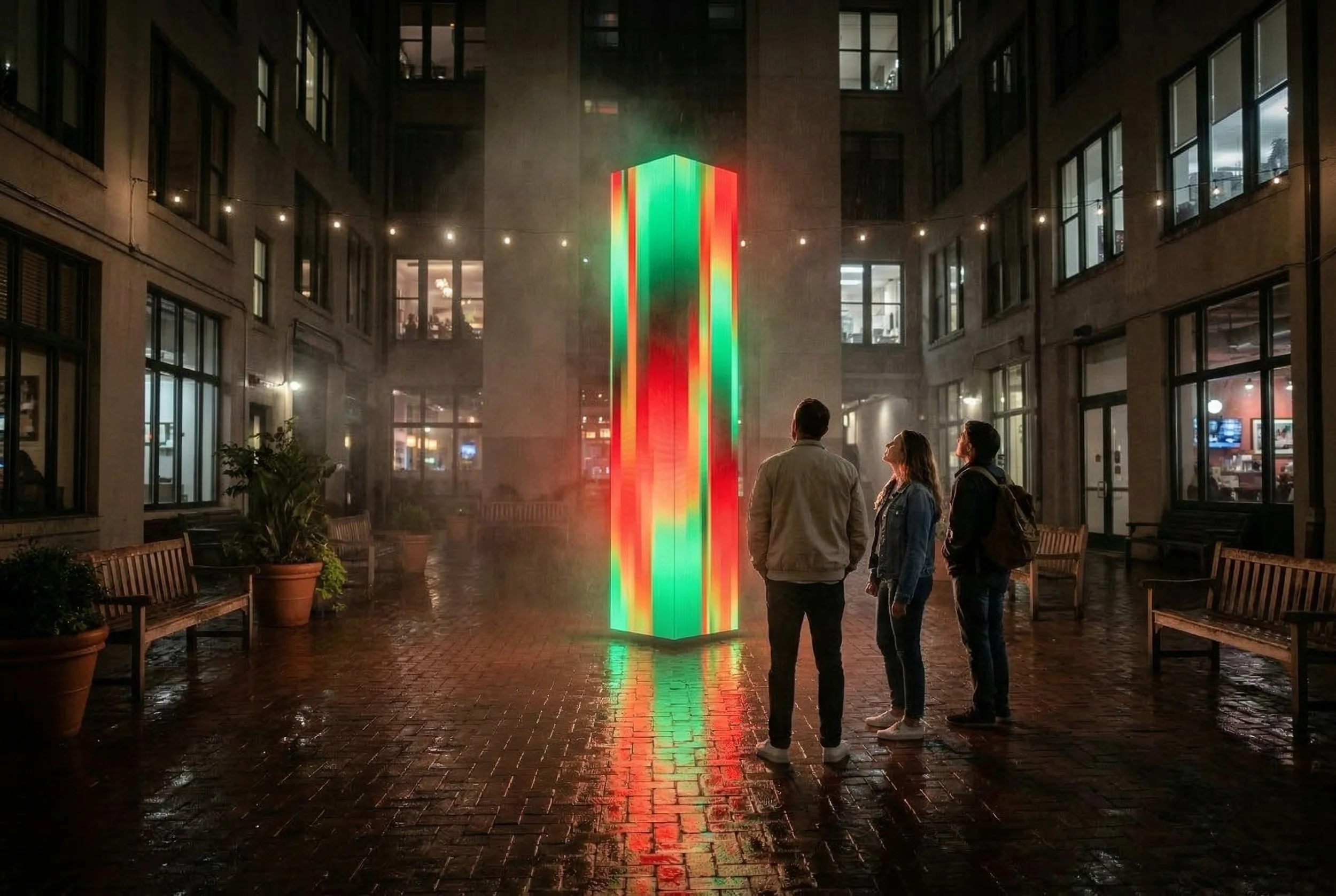
The installation takes the form of a column, whose symbolism is exceptionally rich and carries nearly identical meaning across time and space—from the late Paleolithic to Freemasonry, from Egypt through Europe to India.